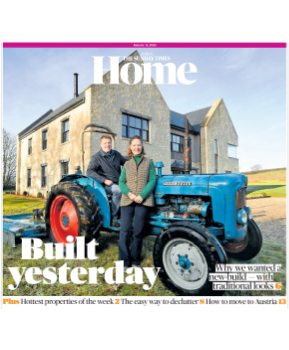
This five bedroom new house near Shaftesbury is part of a Class Q barn conversion. In an exciting first for Richmond Bell, the project is entirely off-grid, with sustainability at the core of its design.
Project Type
New Build
Contemporary
Sustainable
Location
Shaftesbury, Dorset
Project Team
Local Authority
Dorset
Project Size
420sqm
Press Coverage
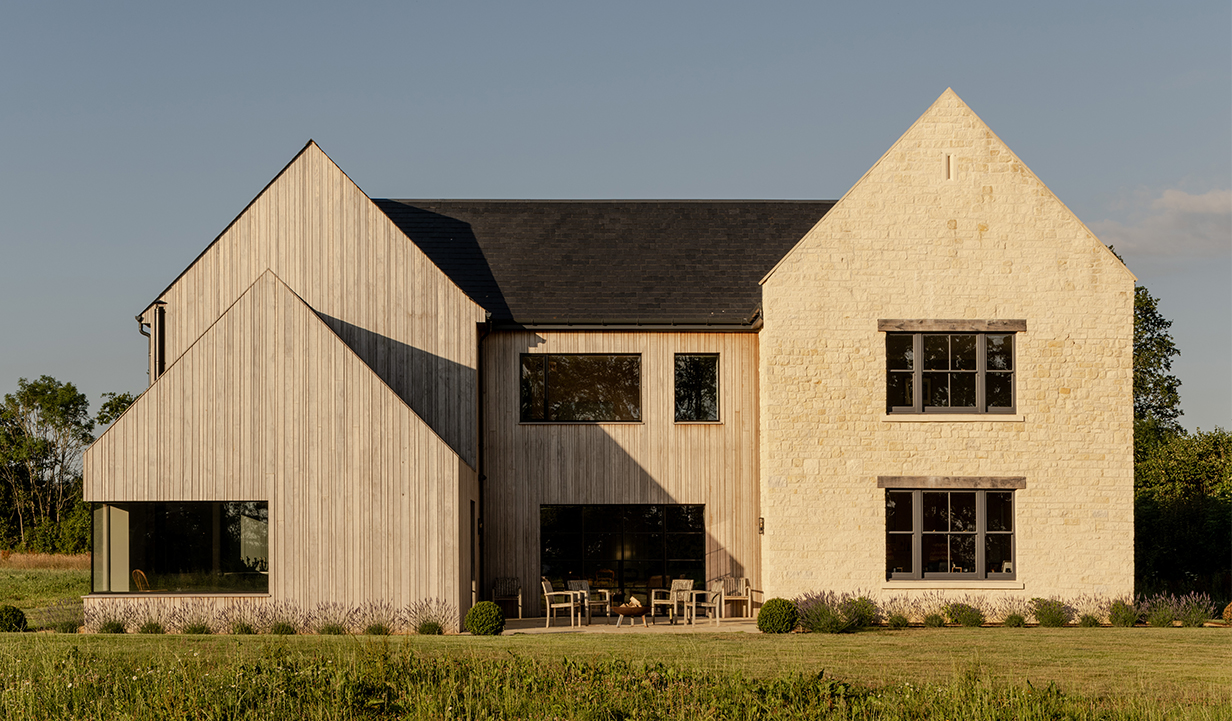
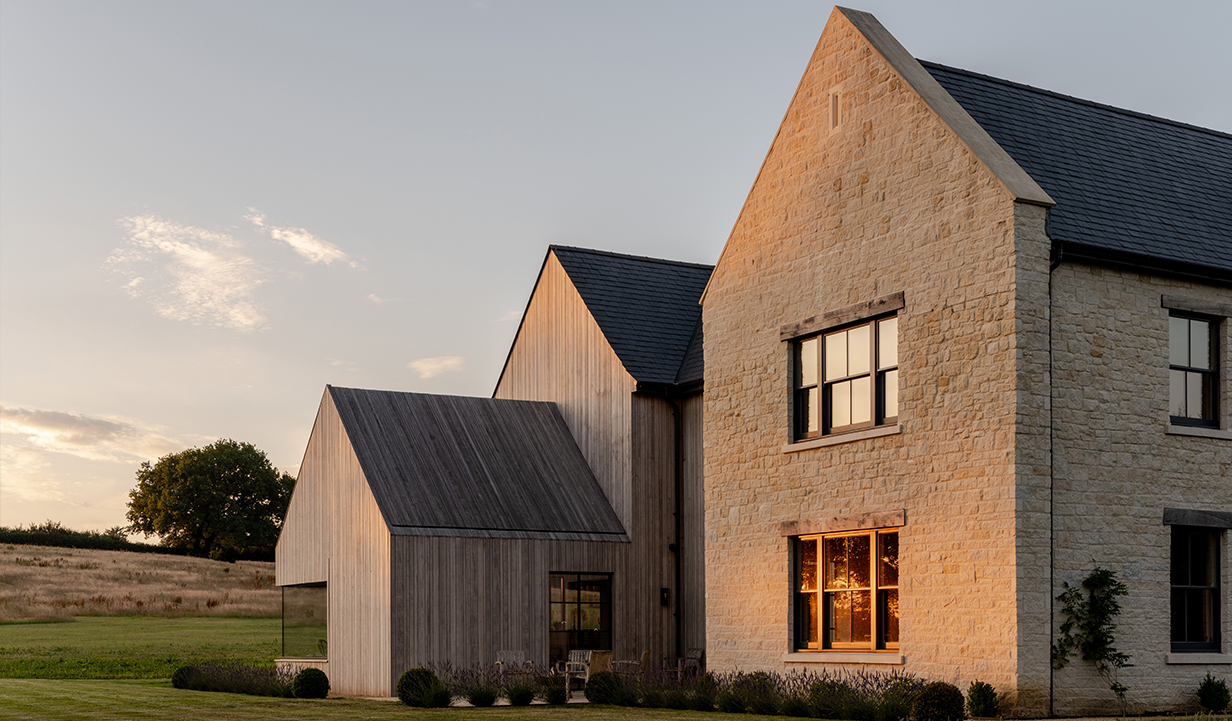
The house is a blend between the two styles of architecture, as can be seen in the window styles and cladding. Traditional box sashes are set within the stone element of the house, while a more contemporary feel is provided from a combination of aluminium and Crittal-style windows and doors. The large frameless aluminium windows shape the views across the fields particularly well, allowing the landscape to be brought into the house.

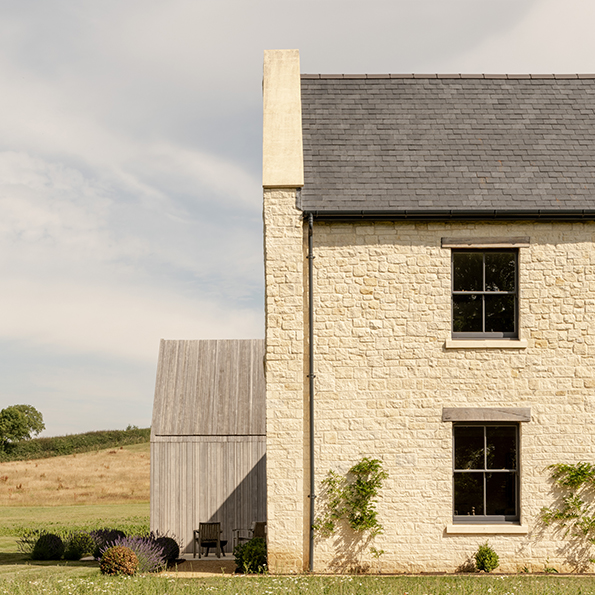
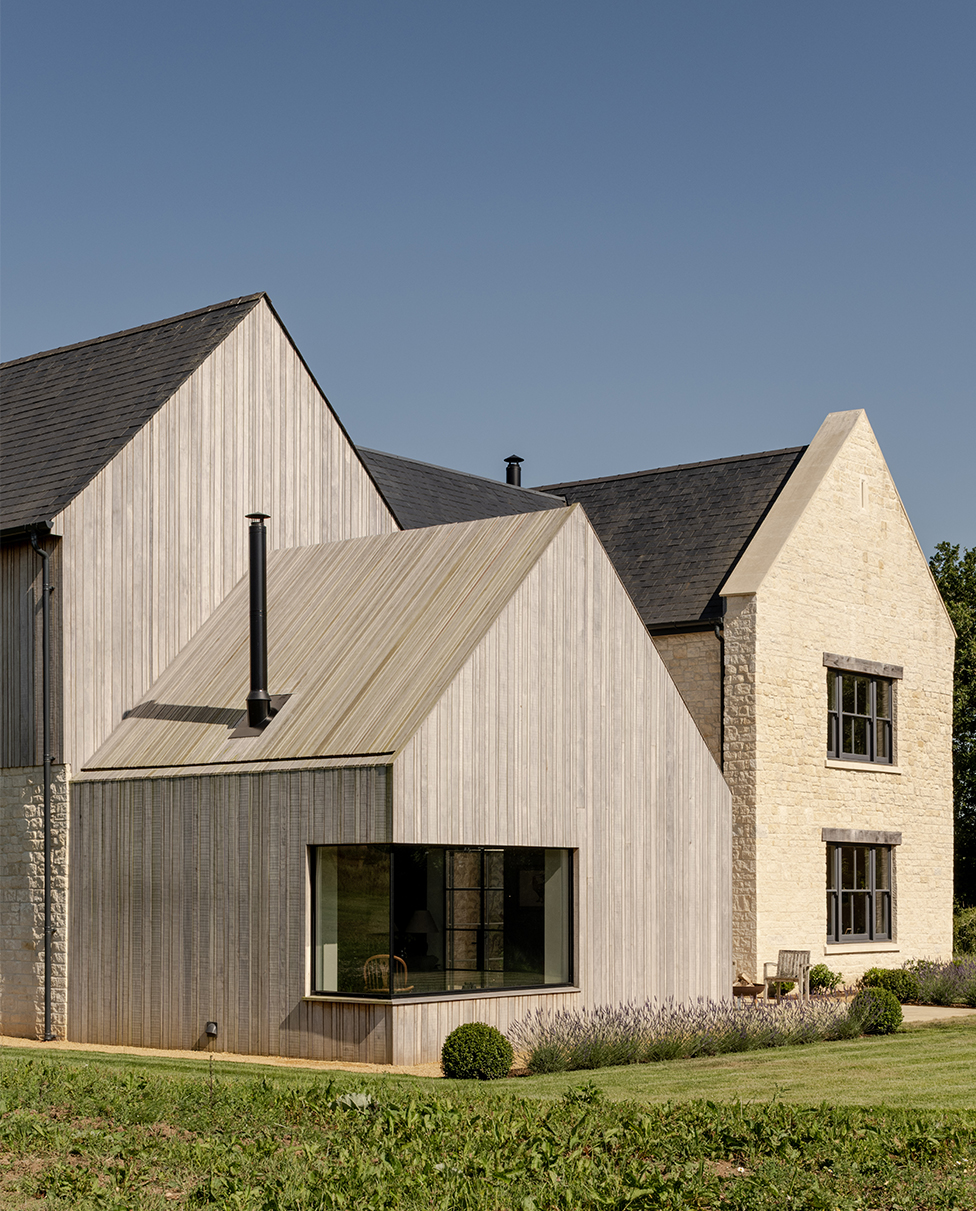
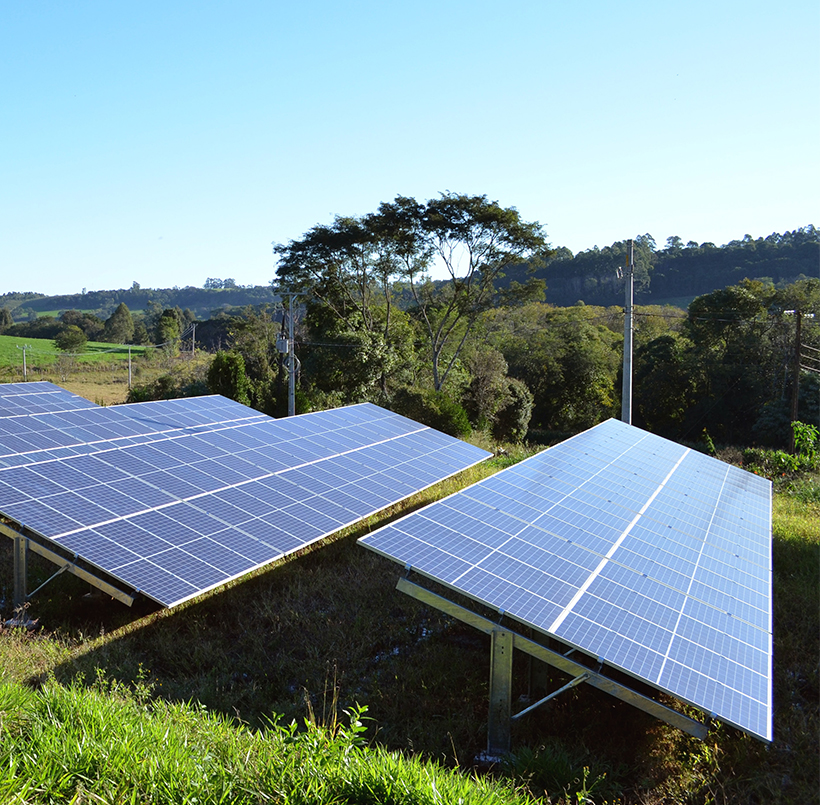
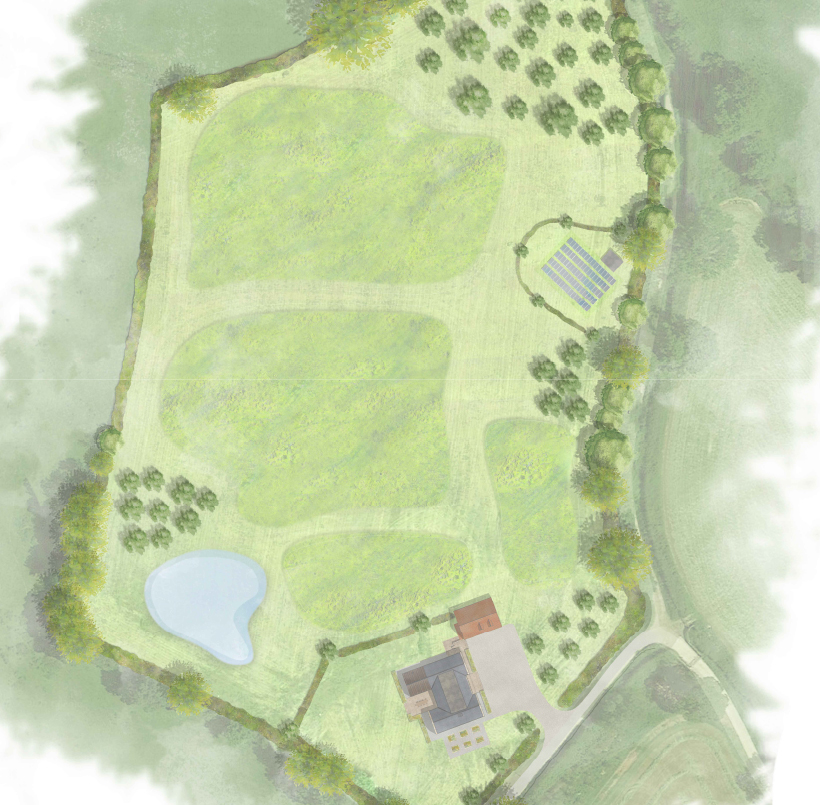
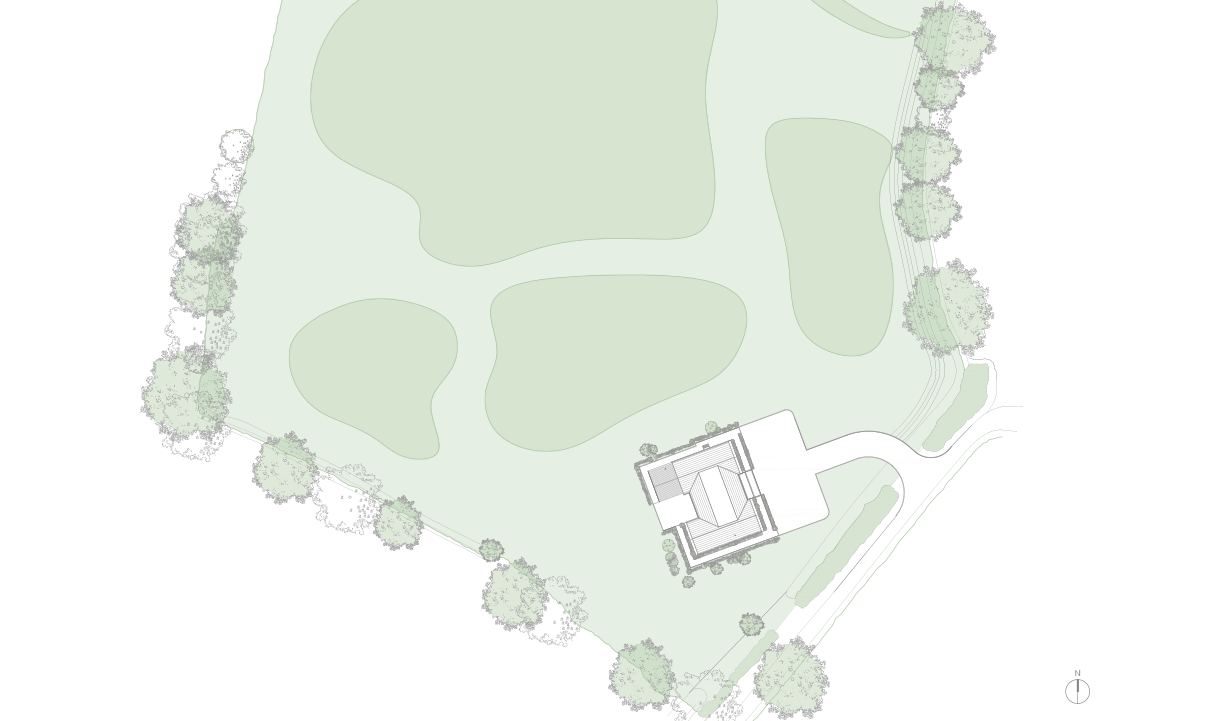
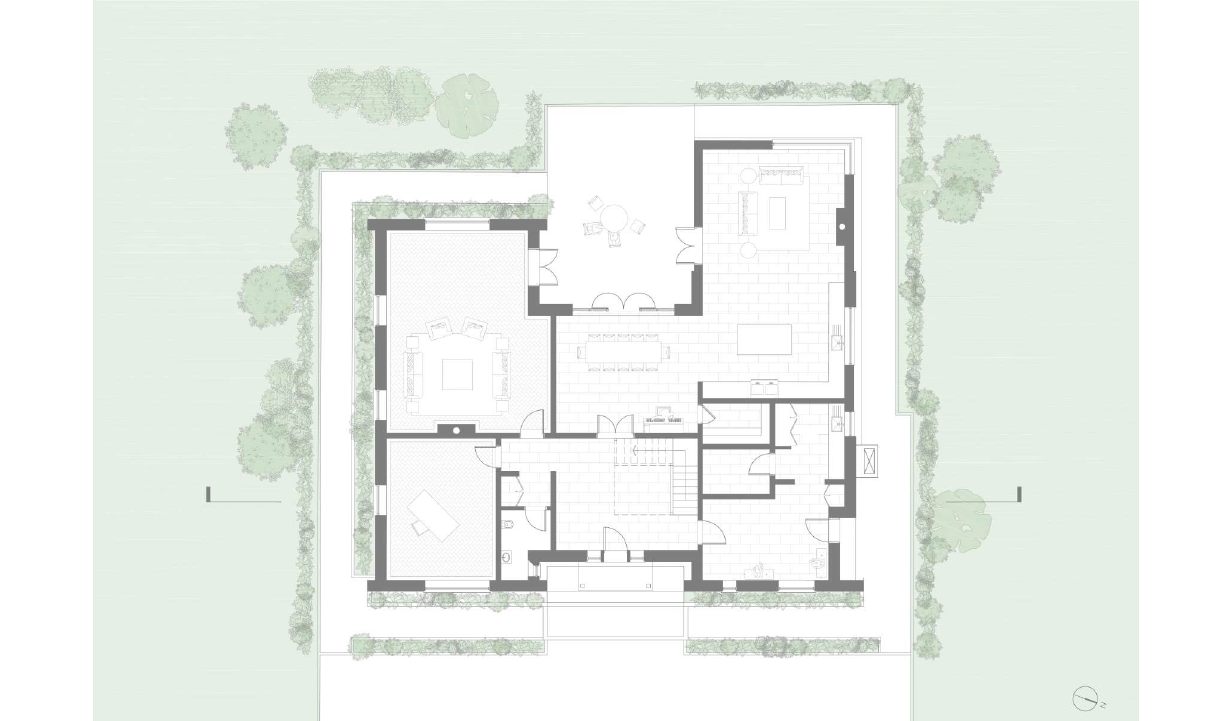
The house is self-sufficient and off-grid with a solar pv array that provides all of the property's energy needs. Heating is provided by an air-source heat pump while water is supplied by a borehole in the field. The solar panels and a field shelter for their battery bank have been carefully sited to reduce visual impact on the surrounding countryside.
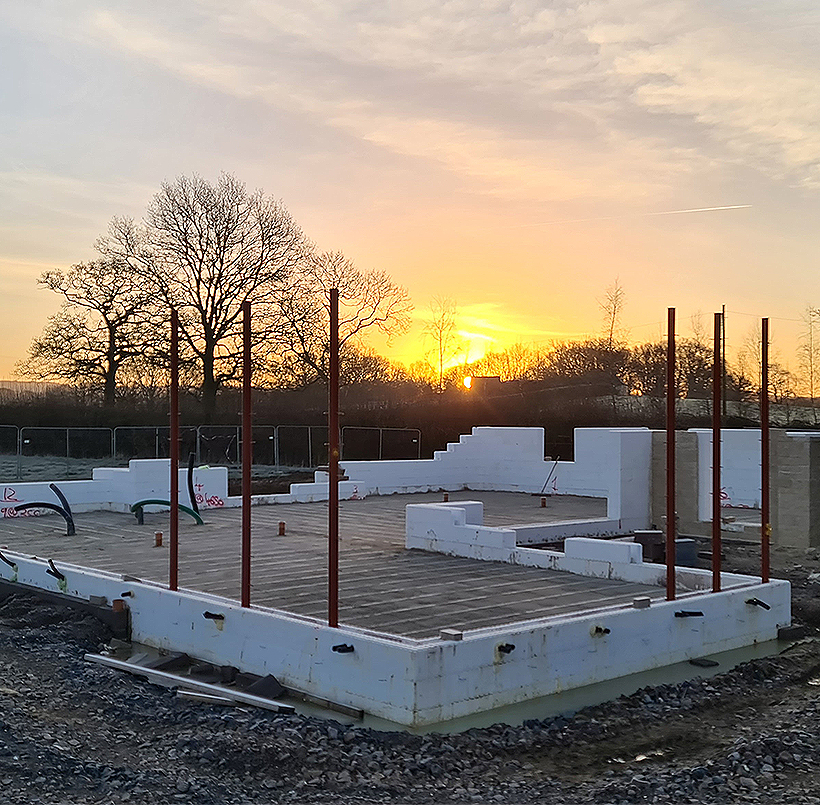
The house was built using sustainable technologies that provide it with high levels of insulation and low levels of heat loss. Insulated Concrete Formwork (ICF) enabled quick construction and provides high levels of thermal mass, which allows for heat to be retained in the winter and a natural cooling effect in the summer.
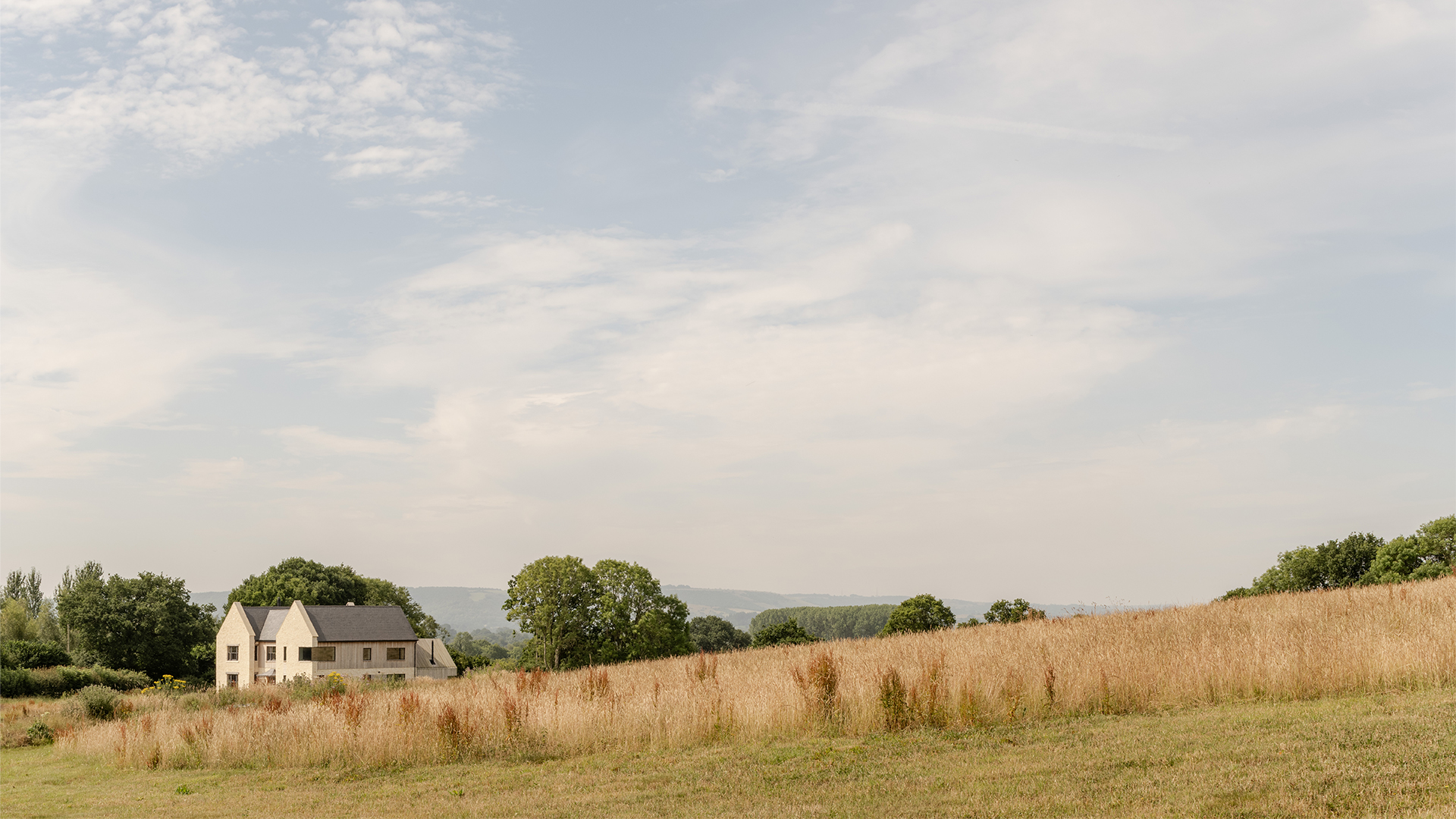
The house forms part of a Class Q consent, which allowed the change of use of an agricultural building into a residential home. Following the Class Q, a new planning application for a replacement dwelling was approved. Richmond Bell carefully considered its orientation and location to ensure it is less visible from the road and nearby properties.
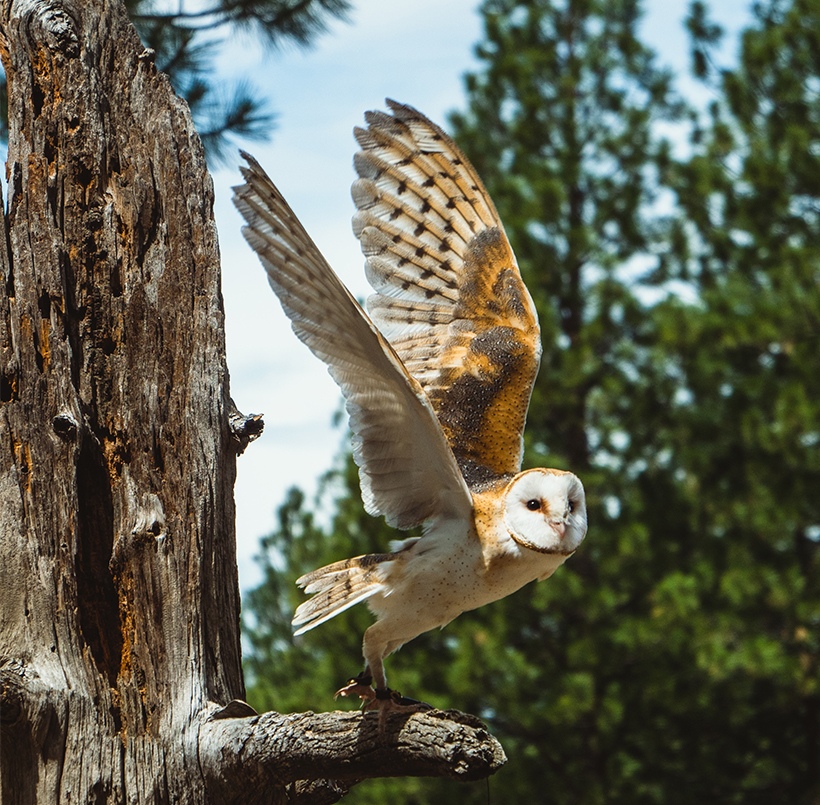
The surrounding field will be renatured, with new woodland and a small pond to provide new habitats for wildlife. The field shelter, and owl boxes in the trees, offer opportunities for barn owl roosts. The client will also install several bat boxes. New hedging to the north will act as a boundary between the domestic curtilage and surrounding land.
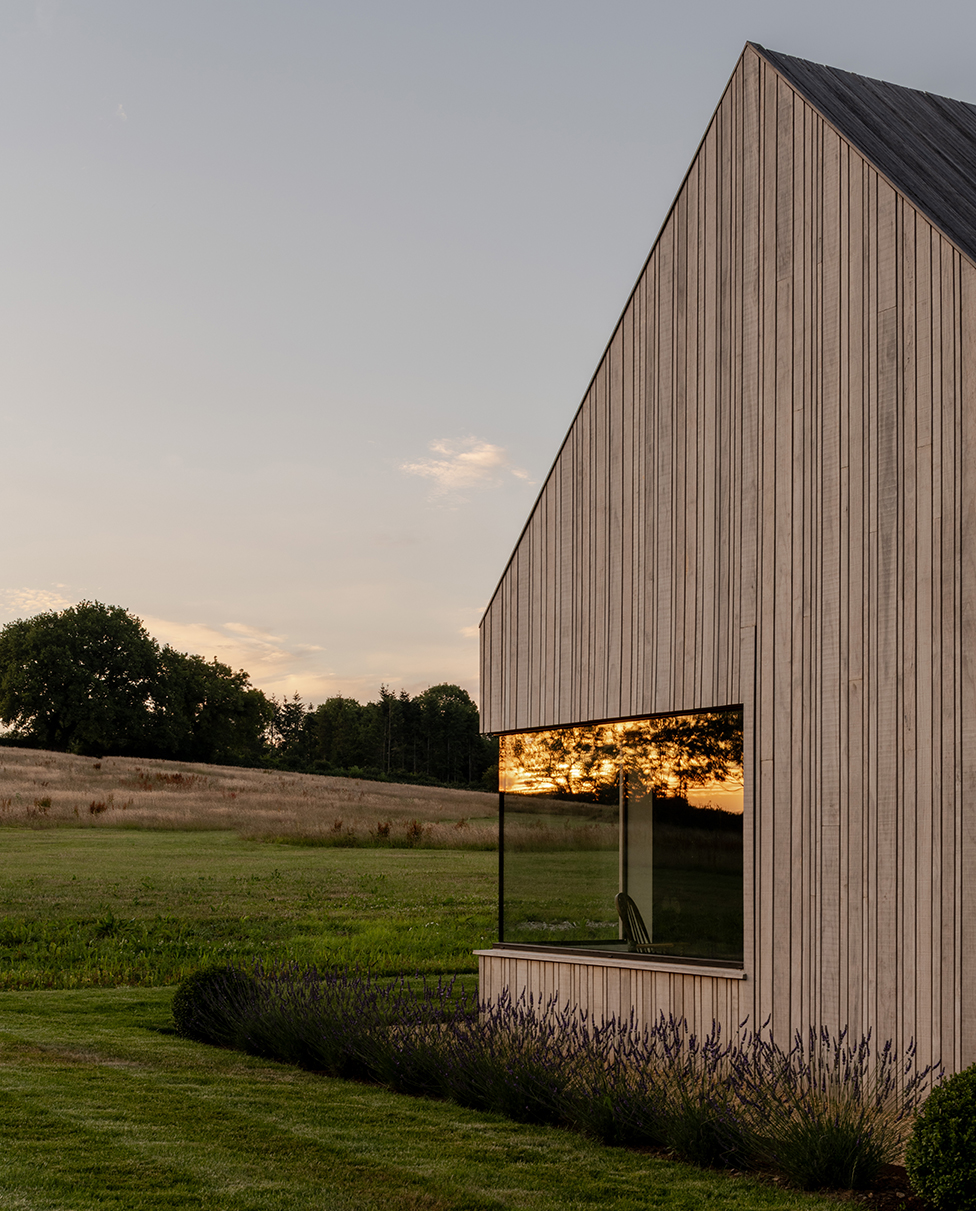
The choice of natural materials was vital to the design. Local Marnhull stone and baked cedar timber cladding contrast each other and embed the house in its rural landscape. The roof is also built with natural slate tiles that weather gently over time, softening the overall form and helping the building settle even further into its surroundings.
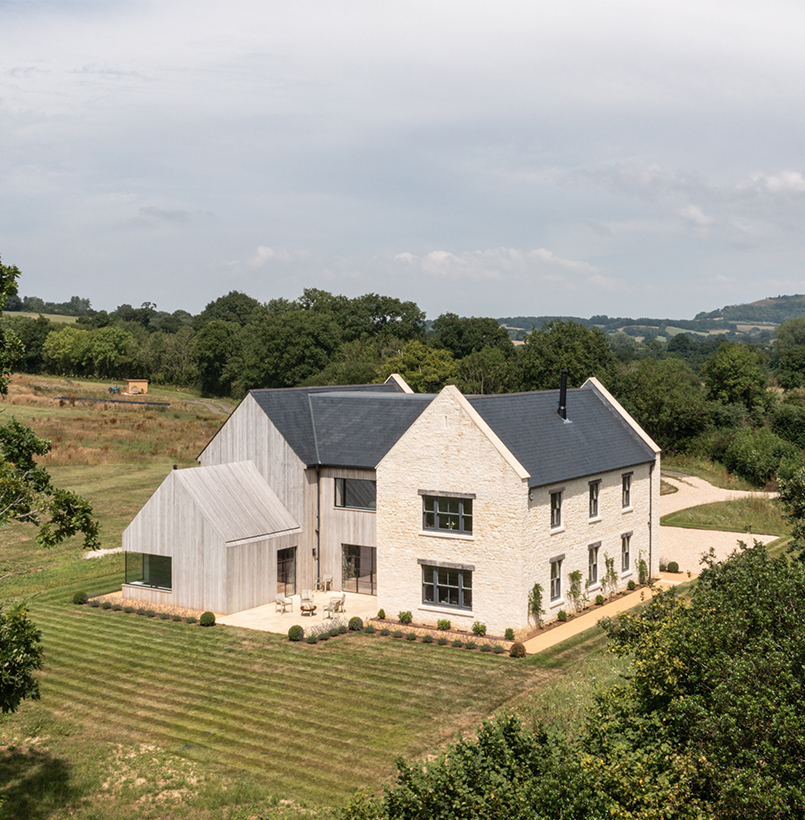
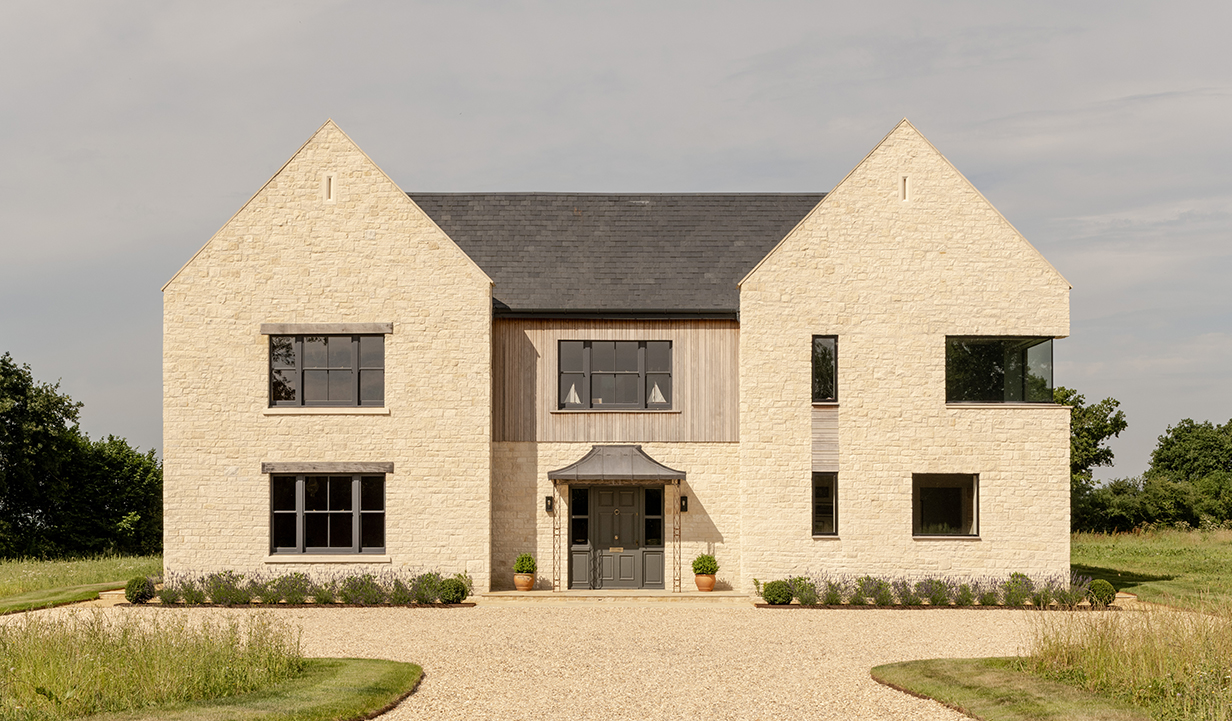
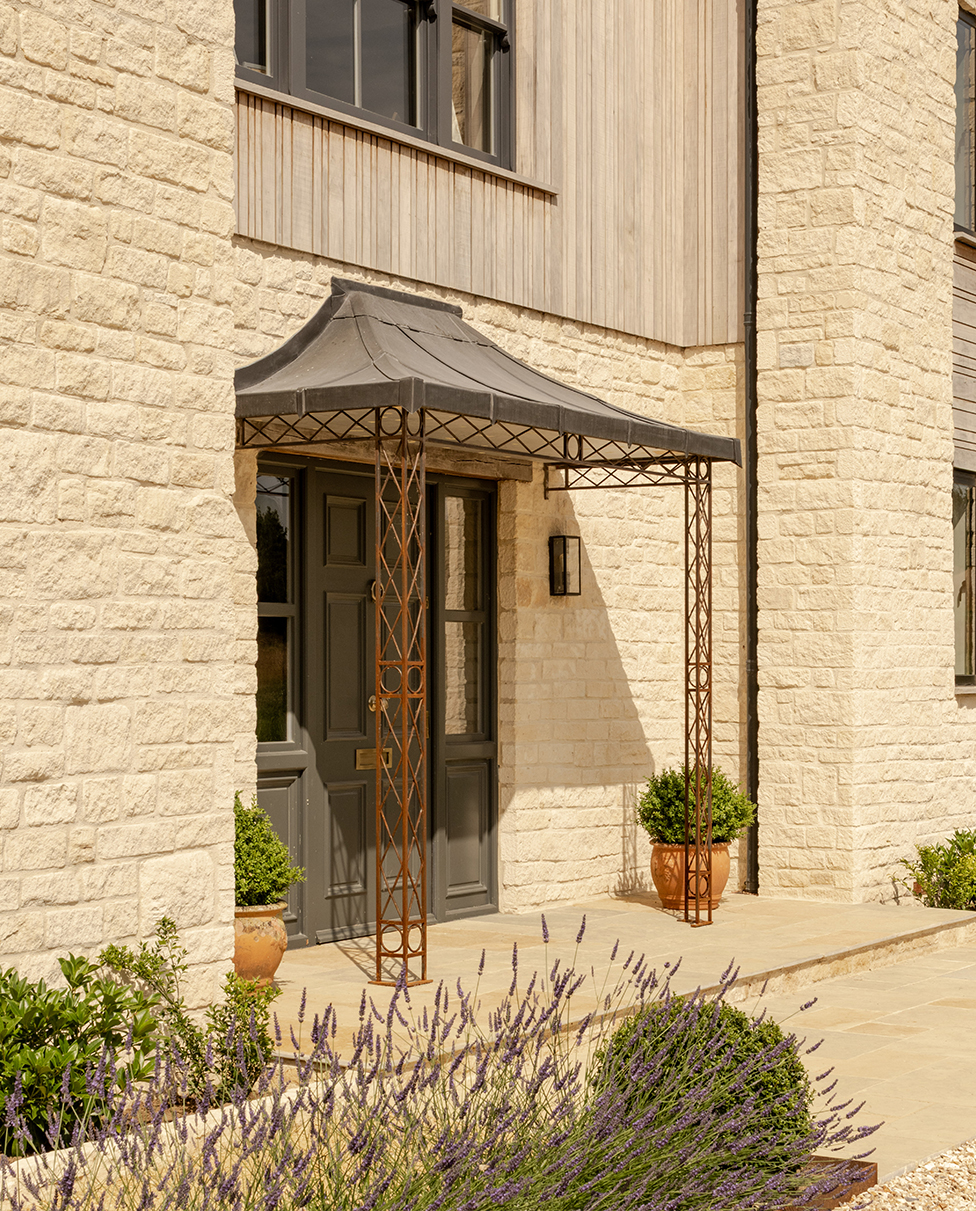

Setting a house into its landscape begins with understanding the natural contours, light, and sightlines of the site. By orienting the building to relate to the land’s topography, Harefield Farmhouse feels grounded and harmonious with its surroundings. Windows have been positioned with intent - framing the most compelling views, capturing shifting patterns of sunlight, and drawing the outdoors into the interior. This balances openness and privacy, ensuring each room connects meaningfully to the landscape while maintaining comfort and energy efficiency. The result is a home that not only sits in its environment, but truly belongs to it.
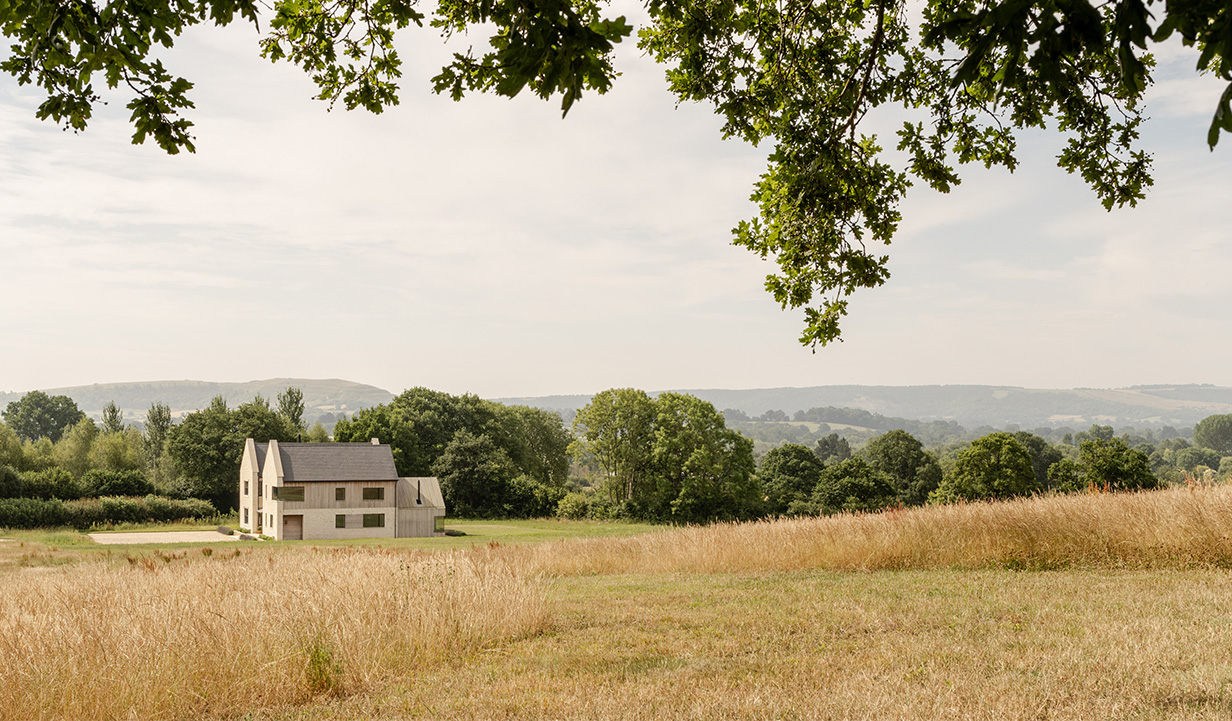
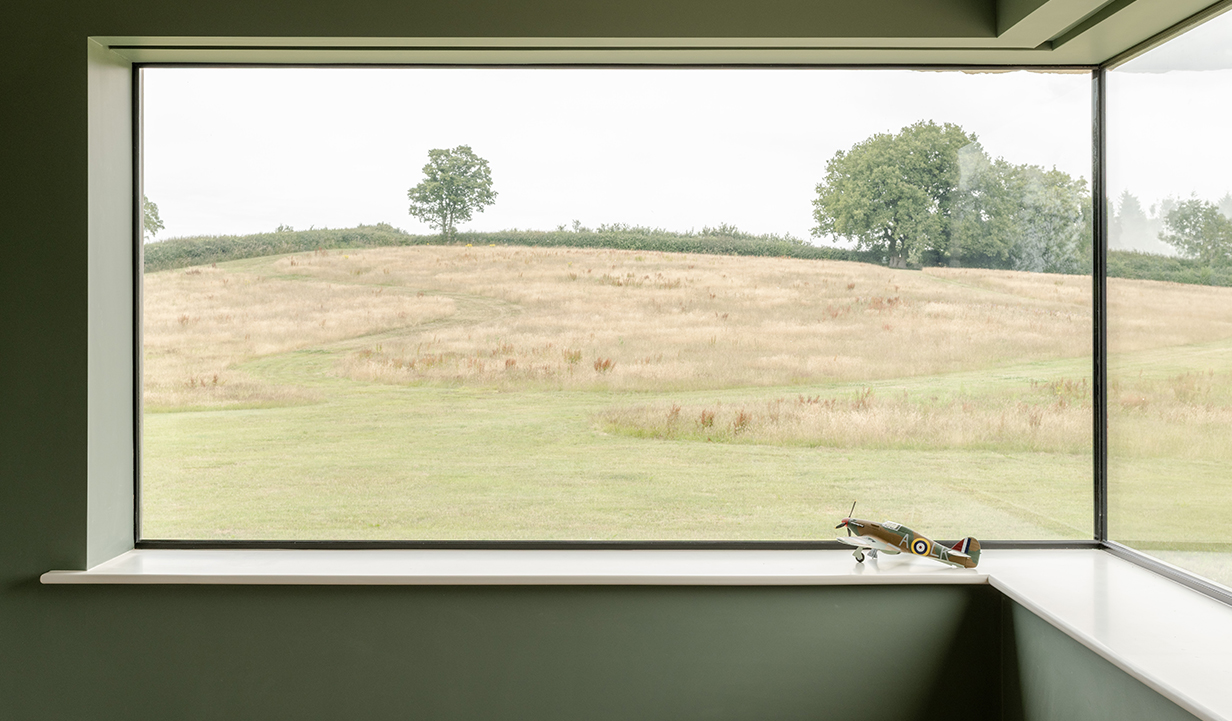

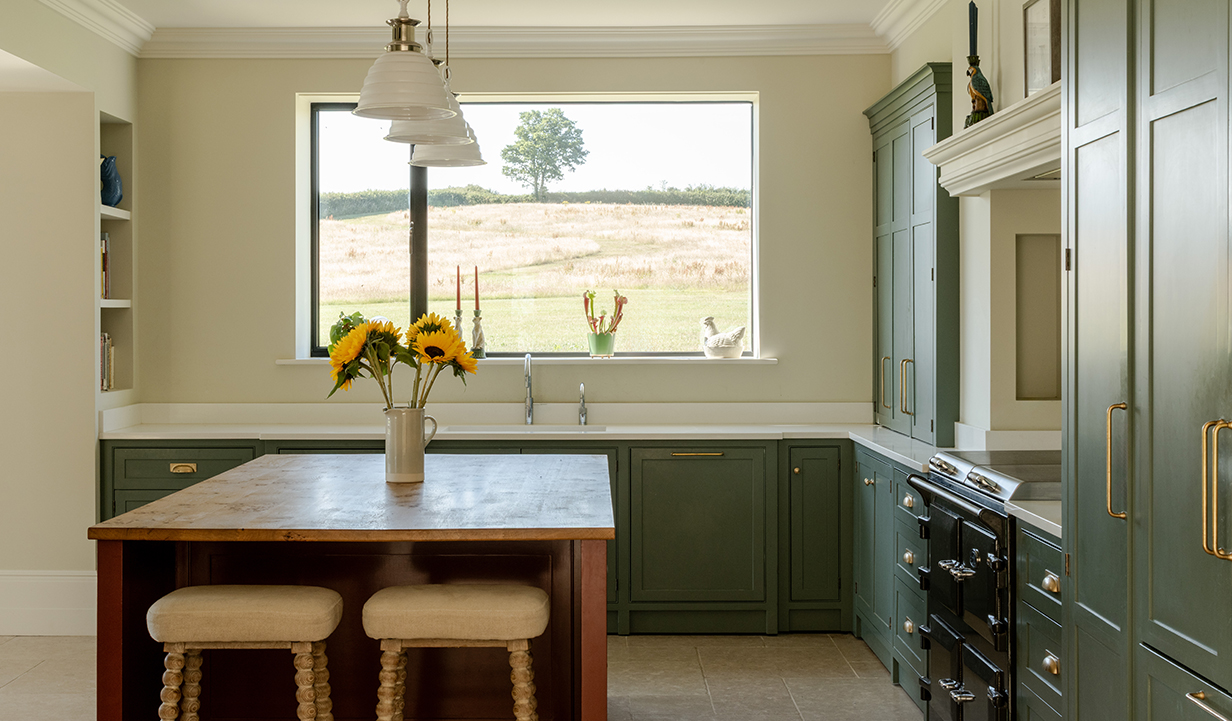
Large windows and generously glazed doors allow natural light to flood into the house, creating bright, uplifting spaces that shift in character throughout the day. By opening the interior to the sun’s path, these elements reduce reliance on artificial lighting while enhancing the sense of openness and connection to the outdoors. Views become an integral part of each room, and the changing light adds warmth, depth, and atmosphere, making the home feel both expansive and intimately tied to its surroundings.

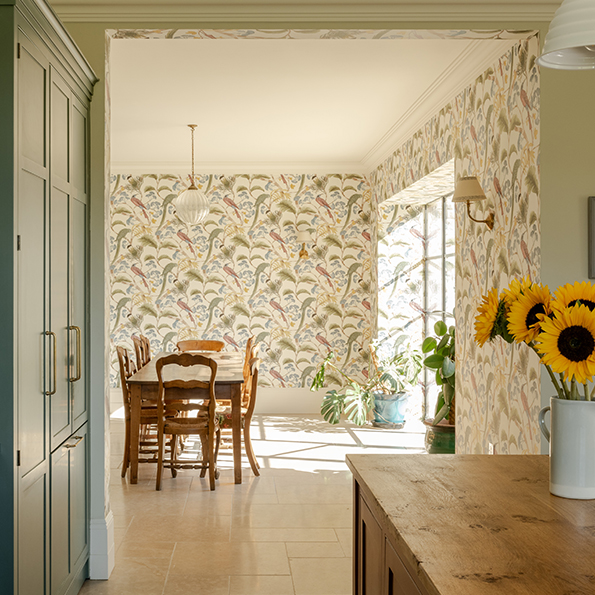

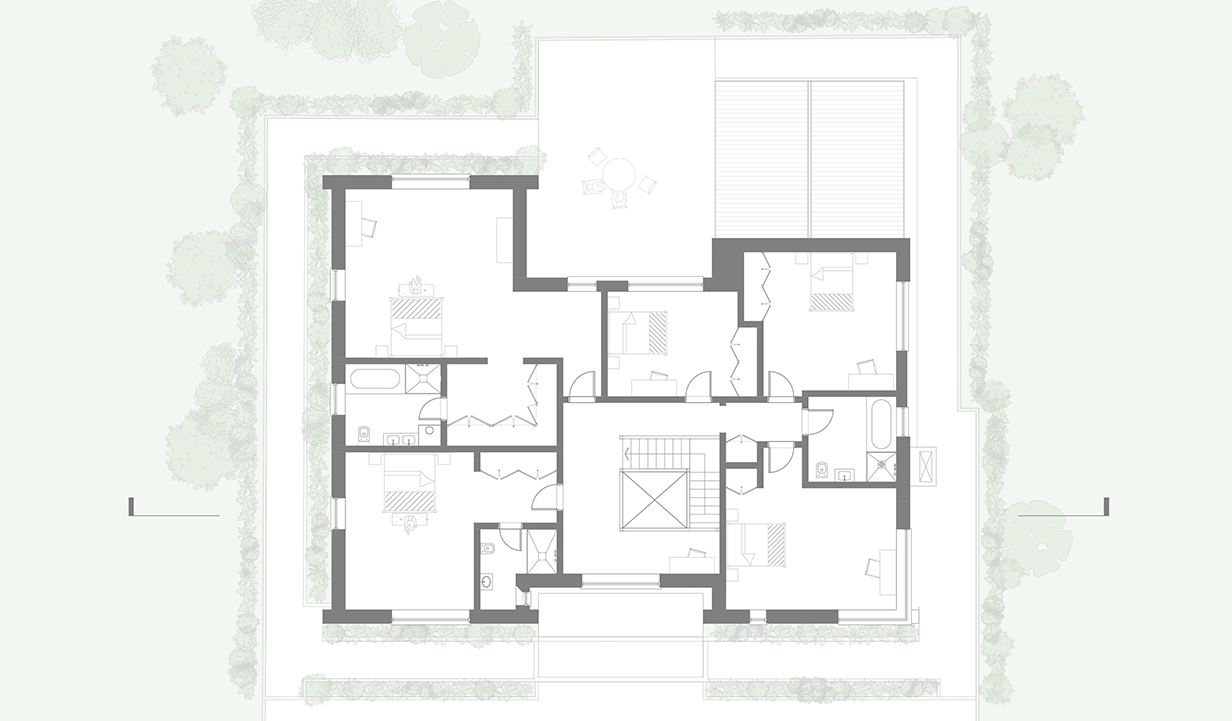
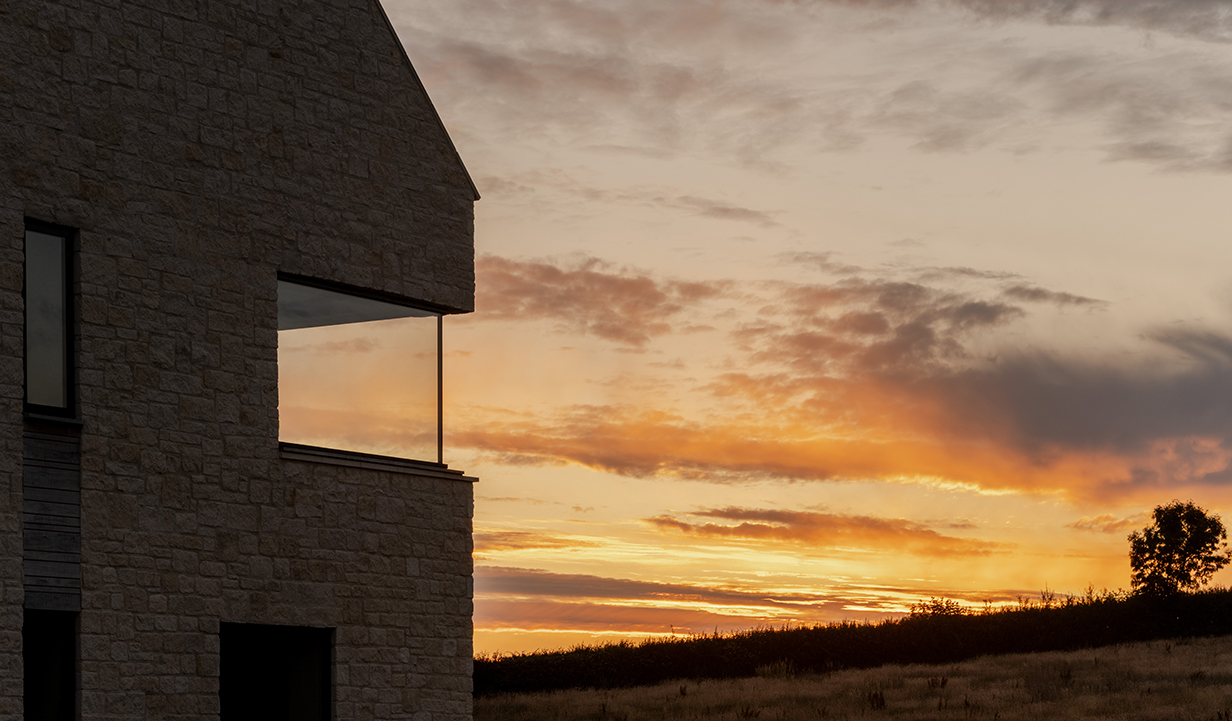
Corner glazing on the first and second floors plays with the sun, letting light flood through the building and reflecting it across the surrounding fields. A peaceful atmosphere prevails, enhanced by the seamless visual connection between inside and out. These expansive windows not only open the home to its landscape, but also cultivate a calm, contemplative mood that permeates every space.
All Insights
View Project
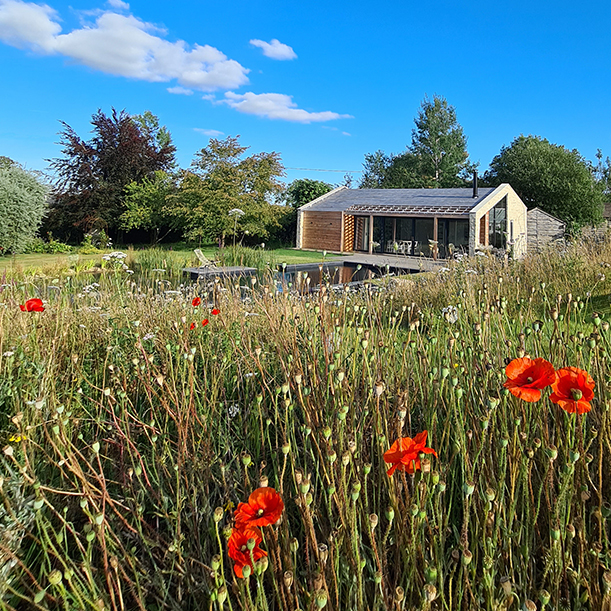
Wildflower Retreat, Wiltshire
Read More
Contemporary Home Planning Success
Read More
Sunday Times Home Section Feature
Contact Us